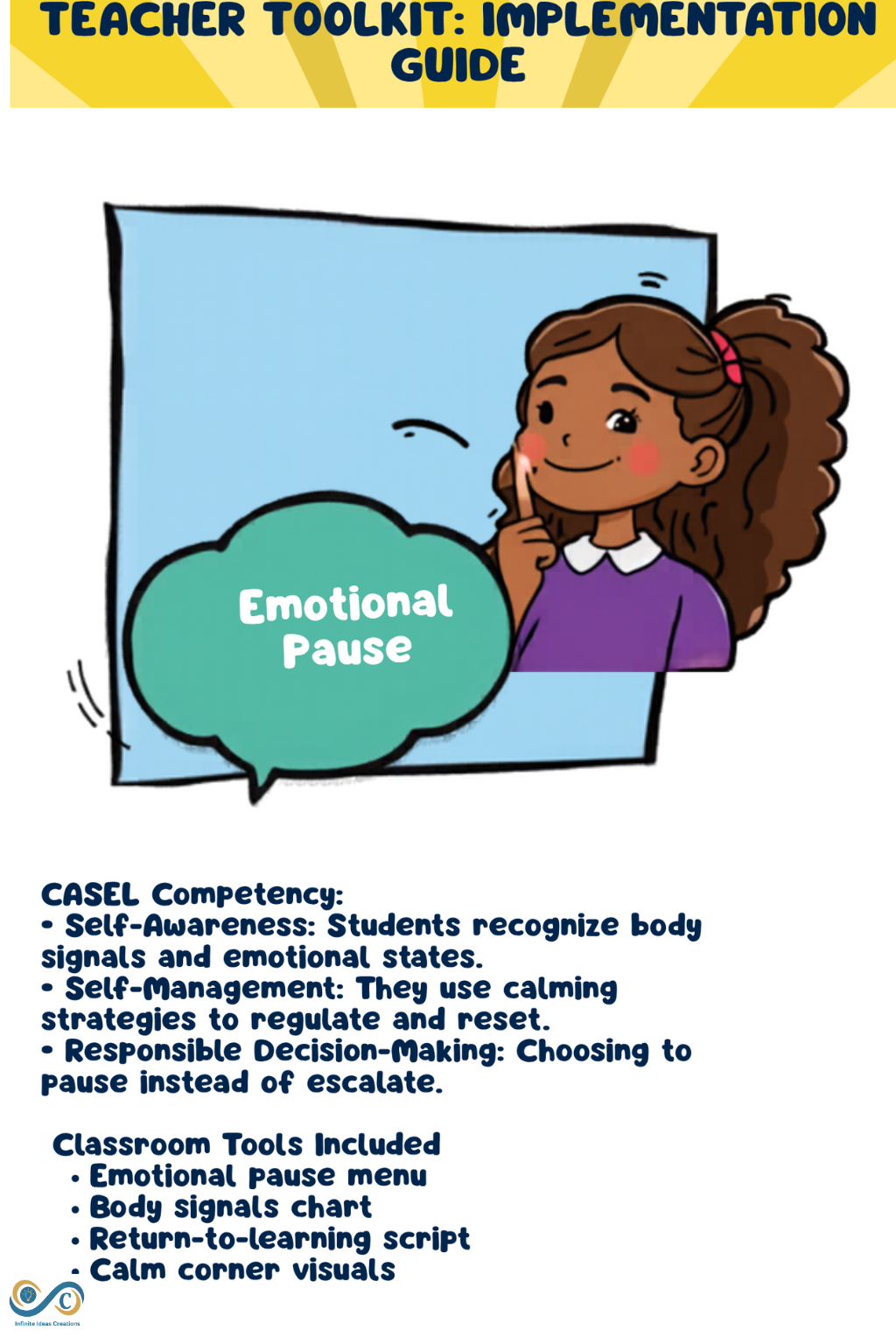

Emotional Pause Strategies For Elementary Classrooms/ Impulse control
Emotional Pause Strategies helps students learn what are emotions, how to manage their emotions and self-regulate. Part four of the Elementary Toolkit for Impulse control, this lesson supports peaceful classrooms.
Purpose
Give students tools to interrupt escalation, regulate emotions, and return to learning safely.
🧩 Teacher Setup
Teach the purpose: “A pause helps your brain reset.”
Introduce 3–5 strategies students can choose from.
Create a predictable routine for requesting a pause.
Each routine is designed to be simple, repeatable, and accessible across diverse learners—including students with ADHD, trauma histories, ENL needs, and academic gaps. These tools are not just behavior supports—they’re dignity-building routines that empower students to notice, name, and navigate their emotions and choices with confidence.
🎯 Why It Matters
When students have predictable, shame-free routines for managing impulses and emotions, they feel safer, more connected, and more capable. These routines reduce crisis behaviors, support smoother transitions, and build a shared language for repair and growth. They also help teachers respond with consistency and clarity, reducing burnout and improving classroom climate.
👥 Who It Benefits
Students: Gain tools for self-awareness, emotional regulation, and decision-making.
Teachers: Receive visual, easy-to-implement strategies that reduce reactive discipline.
Support Teams: SSTs, counselors, and social workers can reinforce routines across settings.
Families: Can use the same language and strategies at home for continuity and support.
✅ Intended Outcomes (When Used Consistently)
Students pause before reacting and make safer, more respectful choices.
Blurting and impulsive behaviors decrease as students build voice regulation.
Emotional escalations are interrupted early with pause strategies.
Classrooms develop a culture of reflection, repair, and shared responsibility.
Teachers feel equipped with practical, visual tools that work across developmental levels.
Each Skill comes with the following:
Each outline includes:
Purpose Statement
Teacher Setup
Student Routine
Modeling & Practice
Reflection Prompts
Classroom Tools to Include Cut out cards, reflection sheets.